

Start here
California Window Tint Law: CVC 26708
California regulates window film by the window, not by the car. This page quotes Vehicle Code 26708 and explains each part in plain English.
- Statute
- CVC 26708
- Front side glass
- 88% + 70%
- Behind the B-pillar
- No limit
The short answer
California tint law by the glass, and the rule that governs each
California does not set one number that makes a car legal. The most useful thing you can do before shopping for tint is stop thinking about the car as one job, because the code does not. Subdivision (a) is the general prohibition on material applied to a vehicle's windows; everything that makes tint lawful is an exception written into a later subdivision.
- Windshield
- 26708(c)A physical measurement taken from the driver's seat — 29 inches — not a percentage.
- Front side windows
- 26708(d)Two thresholds: 88 percent for the material, and FMVSS 205 including its 70 percent minimum for the finished window. This is where enforcement happens.
- Rear side windows
- No darkness limitProvided the vehicle has outside mirrors on both sides.
- Rear window
- No darkness limitSame mirror condition.
- Medical exemption
- 26708(b)(10)Modifies the front side window rule only. Not 26708.5, and not 26708.2.
CVC 26708(c)
The windshield: a measurement, not a percentage
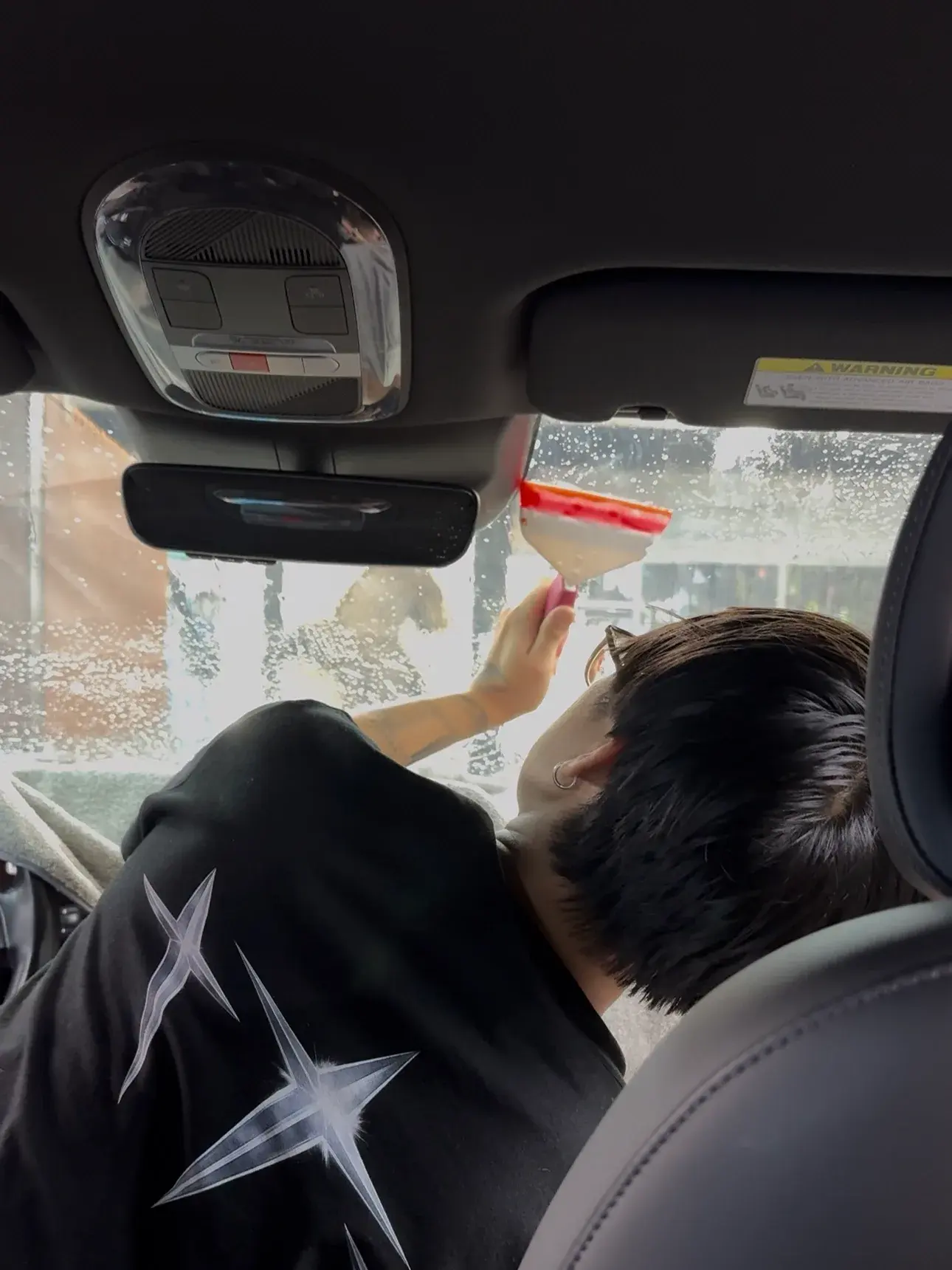
Verbatim: "The bottom edge of the material is at least 29 inches above the undepressed driver's seat when measured from a point five inches in front of the bottom of the backrest with the driver's seat in its rearmost and lowermost position."
- No percentage of light transmittance is attached to this rule
- No fixed number of inches of film appears either
- The 29 inches is measured from the seat, not from the top of the glass
CVC 26708(d)
Front side windows: two thresholds, not one
The subdivision summarized wrong most often. It permits clear material on the front side windows on conditions: the material must have "a minimum visible light transmittance of 88 percent," and it must meet Federal Motor Vehicle Safety Standard 205, "including the specified minimum light transmittance of 70 percent."
- 88 percent applies to the material itself, before it touches your car
- 70 percent applies to the window as a finished assembly — what a meter reads
- Dark film on the front sides is not a gray area here. It sits outside the code.
Rear glass
Rear window tint: behind the B-pillar, the code sets no limit
You can go as dark as you like behind the front doors. The condition is mirrors: the vehicle has to have outside mirrors on both the left and the right side, because rear vision through the glass is no longer something the law is relying on.
- That mirror requirement is separate from the transmittance numbers in 26708
- It is why factory privacy glass on an SUV is unremarkable and the same shade on a front door is not
- Do not read the rule backwards — legal dark rear glass says nothing about the front
CVC 26708(b)(10)
The medical exemption is narrower than its reputation
It permits sun screening devices meeting the requirements of Section 26708.2 on the front side windows, provided the driver or a passenger has "a letter or other document signed by a licensed physician and surgeon certifying that the person must be shaded from the sun due to a medical condition." It does not apply during darkness — the line people find hardest, because film does not come off at sunset.
- It attaches to a person, not to a car, so it travels with that person
- It applies to the front side windows only — not the windshield
- No tint shop, ours included, can tell you whether your condition qualifies
Want film that is legal and still works?
Tell us the vehicle. We will fit the front glass to what the code allows and put the performance everywhere it is permitted.
Going deeper
The statute, in depth
The rest of what we would tell you standing next to the car. Open whichever part matters to you.
How the 29 inches on the windshield is actually taken
Every word in that sentence is doing work, and taken in order it is easy to reproduce with a tape measure. Twenty-nine inches is the same in every vehicle; the seat is not. A low coupe and a lifted truck put that mark in very different places on the glass, which is why the honest answer to how large a windshield strip can be is a measurement taken on that specific car and never a fixed number of inches of film.
Notice what the subdivision does not reference. Shops sometimes shorthand the windshield rule to a line etched into the glass by the manufacturer. That is a convenient proxy, not the language of the code, which states a measurement from the driver's seat.
Subdivision (c) attaches more than one condition to windshield material. This is the one that decides how far down the glass it may come. Read the full subdivision before assuming a layout is compliant.
- Put the driver's seat in its rearmost and lowermost position — the position the code names, not the one you drive in
- Leave the seat undepressed. Nobody sits in it while you measure.
- Find the bottom of the backrest, where the seatback meets the cushion
- Move five inches forward of that point
- Measure 29 inches straight up and mark the windshield at that height
- Material may sit above the mark. Its bottom edge may not come below it.
Running the 88 and the 70 on a real window
Visible light transmittance is the percentage of visible light that passes through. The detail people miss is that automotive glass is not clear at 100 percent to begin with — your door glass has its own VLT before anything is applied to it.
Take a car whose bare driver's door glass reads 78 percent on a meter. Apply a film that is 88 percent as manufactured, satisfying the material threshold in subdivision (d). As a first approximation, multiply: 0.78 times 0.88 is 0.686, roughly 69 percent at the finished window. The material cleared its 88 and the assembled window still came in under 70.
Change one input. If that same door glass reads 82 percent, then 0.82 times 0.88 is 0.72, roughly 72 percent, and the window clears. Nothing about the film changed. The glass decided it.
The multiplication is an approximation, since light reflects between the layers, so the meter reading on the assembled window is the number that counts. The point stands: 88 percent film is not an automatic pass.
- 88% film on 78% glass
- ≈69%Fails the finished-window threshold.
- 88% film on 82% glass
- ≈72%Clears it. Same film, different glass.
- 35% film on 78% glass
- ≈27%
- 20% film on 78% glass
- ≈16%
- 5% film on 78% glass
- ≈4%
What happens if you get a tint ticket in California
Tint enforcement in California normally runs through the correctable violation process, the fix-it ticket. An officer who believes the front side windows are outside the code can meter them at the roadside. The citation then directs you to correct the condition, which means removing the film, to have the correction certified, and to pay the court's dismissal fee.
We are not going to quote a dollar figure, and you should be skeptical of any page that does. Section 26708 does not set the total. You pay a base fine plus state and county assessments, or a dismissal fee if the citation is handled as correctable, and those schedules are set by the court. The court named on your citation is the only reliable source.
Two costs people forget. The film has to come off, and removal is labor you pay for on top of what the court charges. And if you miss the correction date, the correctable path closes. The citation goes to the driver — that a shop said the film was legal is not a defense at the roadside, which is why you want a meter reading before you drive away.
Read CVC 26708 yourself
The full text is published by the California Legislature at leginfo.legislature.ca.gov, law code VEH, section 26708. It is short, and reading it settles most arguments before they start.
Two habits keep you accurate. Cite the subsection, not just the section, because 26708 on its own does not say whether you mean the windshield, the front sides or a doctor's letter. And check the date on what you are reading, since code sections get amended and an old forum post is not evidence of anything.
What California tint law means when you are picking a film
Once you accept that the front sides are effectively a near-clear zone and the rear is unrestricted, choosing film stops being a darkness conversation and becomes a heat and glare conversation.
Visible light transmittance and heat rejection are different measurements, and they are not locked together. A film can pass a great deal of visible light and still reject a large share of the infrared energy that turns a parked cabin into an oven. That is the only sensible approach to the front two windows of a California car.
We carry film from STEK Automotive, SunTek and 3M. Which brand and which construction we recommend depends on what you are solving for and what your glass measures. We will tell you what a film will read on the finished window before it goes on, not after. For the windshield, we measure the 29 inches on your vehicle and show you where the line falls before we discuss a layout. If what you have in mind sits below it, we will say so.
Window tint pricing, turnaround and warranty
Our tint pricing is published, which is not the norm in this trade. Every tint job carries our 2 year, 24,000 mile workmanship warranty, on top of whatever the film manufacturer covers, assessed per vehicle and confirmed in writing before we start work.
Film removal is not on the published list, because what removal takes varies with what was installed and how long it has been baking on the glass. Ask when you book and we will put the number in writing before any work starts.
- Coupe
- $450
- Sedan
- $650
- SUV or truck
- $850
- Windshield
- $250
- Full vehicle tint
- 4 hours
- Windshield tint only
- 2 hours
- Shop
- 15317 Pipeline LnHuntington Beach, CA 92649. One shop, not mobile, serving all of Orange County.
This page is not legal advice
We install film. We are not attorneys, and nothing here is legal advice. This page is a plain-English reading of Vehicle Code section 26708 with the operative language quoted so you can check every claim on it against the source.
Codes get amended and courts interpret them. If you are dealing with a citation, a medical exemption question, or anything else with a consequence attached, read the current text at leginfo.legislature.ca.gov and talk to an attorney or to the court named on your citation. Do not treat a tint shop's website, including this one, as your final answer on a question of law.
Questions we get asked about the law
What is the legal tint percentage in California?
There is no single percentage. Vehicle Code 26708 treats each window differently. The front side windows carry two thresholds under 26708(d): the material must have a minimum visible light transmittance of 88 percent, and the finished window must meet FMVSS 205 including its 70 percent minimum. The rear side windows and rear window have no darkness limit, provided the vehicle has outside mirrors on both sides. The windshield is governed by a 29-inch measurement rather than a percentage.
Is 35 percent tint legal on front windows in California?
No. No 35 percent figure governs front side windows in the code. On typical door glass a 35 percent film puts the finished window in the twenties, far below the 70 percent minimum that 26708(d) carries through FMVSS 205.
Can I tint my windshield in California?
Material may sit at the top of the windshield. 26708(c) states that the bottom edge of the material must be at least 29 inches above the undepressed driver's seat, measured from a point five inches in front of the bottom of the backrest with the seat in its rearmost and lowermost position. Because the measurement starts at the seat, the resulting band differs from car to car. There is no four-inch strip in the code.
How dark can my rear windows be in California?
The code imposes no darkness limit on the rear side windows or the rear window, provided the vehicle has outside mirrors on both the left and right sides. That mirror condition is the whole requirement.
What do I need for a window tint medical exemption in California?
26708(b)(10) requires a letter or other document signed by a licensed physician and surgeon certifying that the person must be shaded from the sun due to a medical condition, and the device must meet the requirements of Section 26708.2. It applies to the front side windows, it attaches to a person rather than to a car, and it does not apply during darkness. We are not physicians and cannot issue or evaluate that letter.
Is the medical tint exemption Vehicle Code 26708.5?
No. The exemption is 26708(b)(10). Section 26708.2 is referenced inside it as the standard the sun screening device has to meet, which is why 26708.2 gets miscited as the exemption as well. Neither 26708.5 nor 26708.2 is the exemption itself.
What happens if I get a tint ticket in California?
Tint is normally written as a correctable violation. An officer can meter the front side windows at the roadside, and the citation directs you to remove the film, have the correction certified, and pay the court's dismissal fee. Section 26708 does not set the total, so the court named on your citation is the only reliable source for what you owe. Removal is labor you pay for on top of that, and missing the correction date closes the correctable path.
If my film is 88 percent, am I automatically legal on the front windows?
No. The 88 percent is a requirement on the material. The finished window still has to clear 70 percent, and that depends on the VLT of your glass before anything is applied. On glass reading 78 percent, an 88 percent film lands around 69 percent at the window and fails; on glass reading 82 percent, the same film lands around 72 percent and clears.
Will you install tint that is outside the code?
Not on the front side windows or the windshield. We fit those to what 26708 allows and we will tell you what the finished window measures before the film goes on. Behind the B-pillar there is no darkness limit, so that is your choice to make.
Want tint that is legal and still rejects heat?
Tell us the vehicle and how you use it. We will fit the front glass to what the code allows and put the performance everywhere it is permitted.