

Car wrap & vinyl
Color Change Car Wrap in Huntington Beach
A removable vinyl skin over your factory paint. A full color change runs $2,800 to $4,200 by body style and takes five to seven days.
- Full color change
- $2,800–$4,200
- In the shop
- 5–7 days
- Warranty
- 2 yr / 24k mi
Packages
Full color change, priced by body style.
Every painted panel wrapped, factory paint untouched underneath. Partial work and chrome delete are priced per item in the full list below.
-
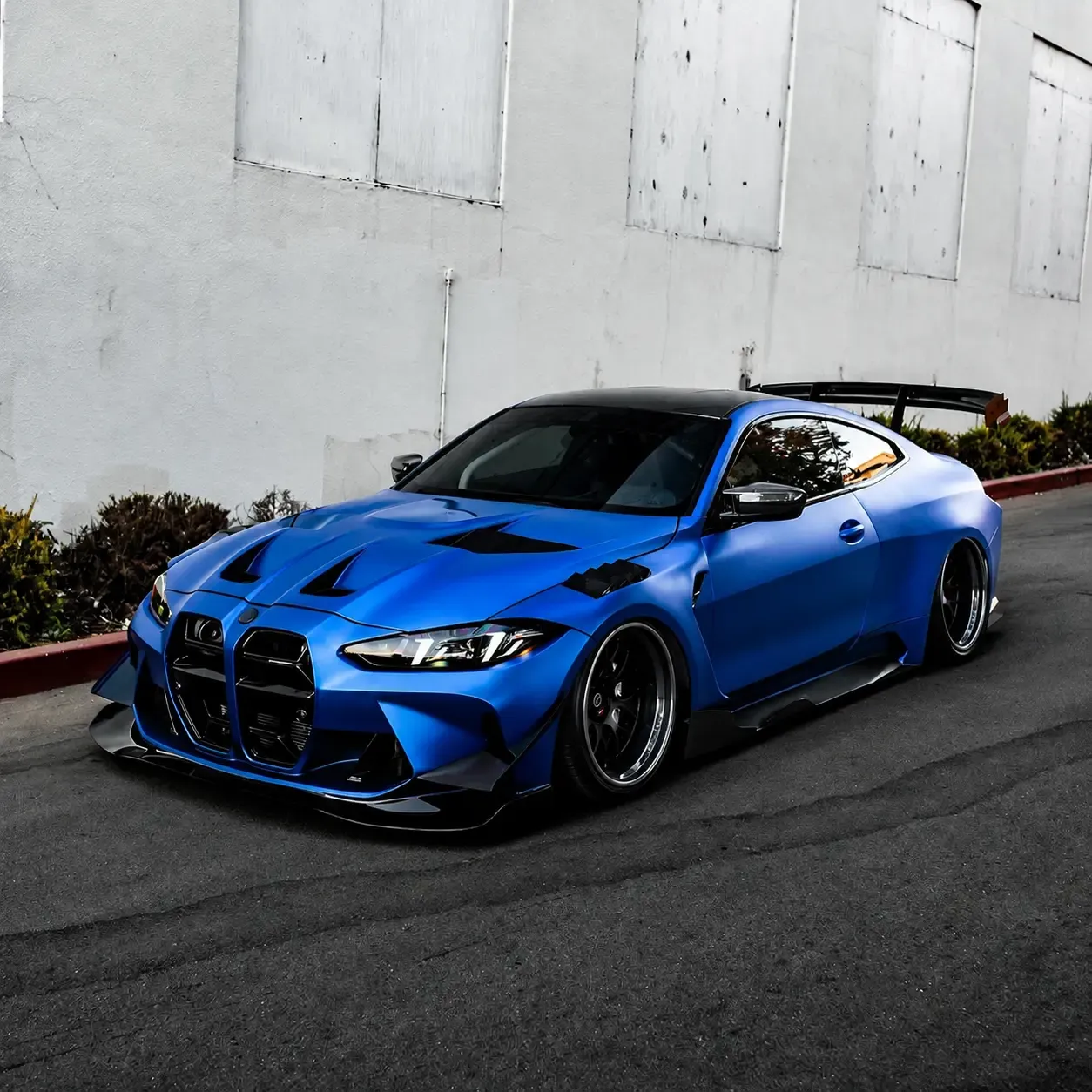
Coupe
Two doors, full exterior color change.
$2,800
- Every painted panel
- Factory paint preserved
- Gloss, satin or matte
- Reversible
In the shop 5-7 days
Get this quoted -
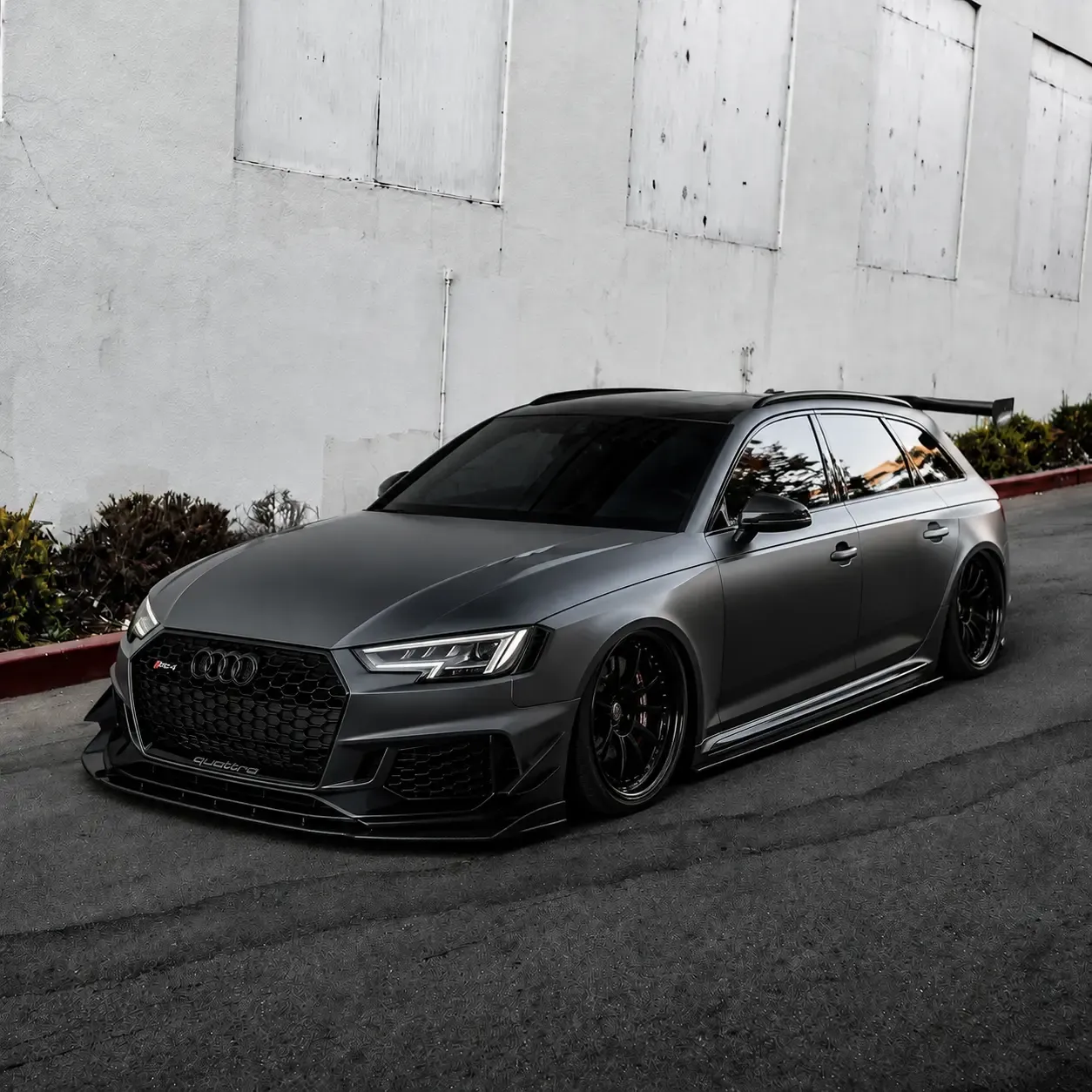
Most common
Sedan
Four doors, full exterior color change.
$3,500
- Every painted panel
- Factory paint preserved
- Gloss, satin or matte
- Reversible
In the shop 5-7 days
Get this quoted -
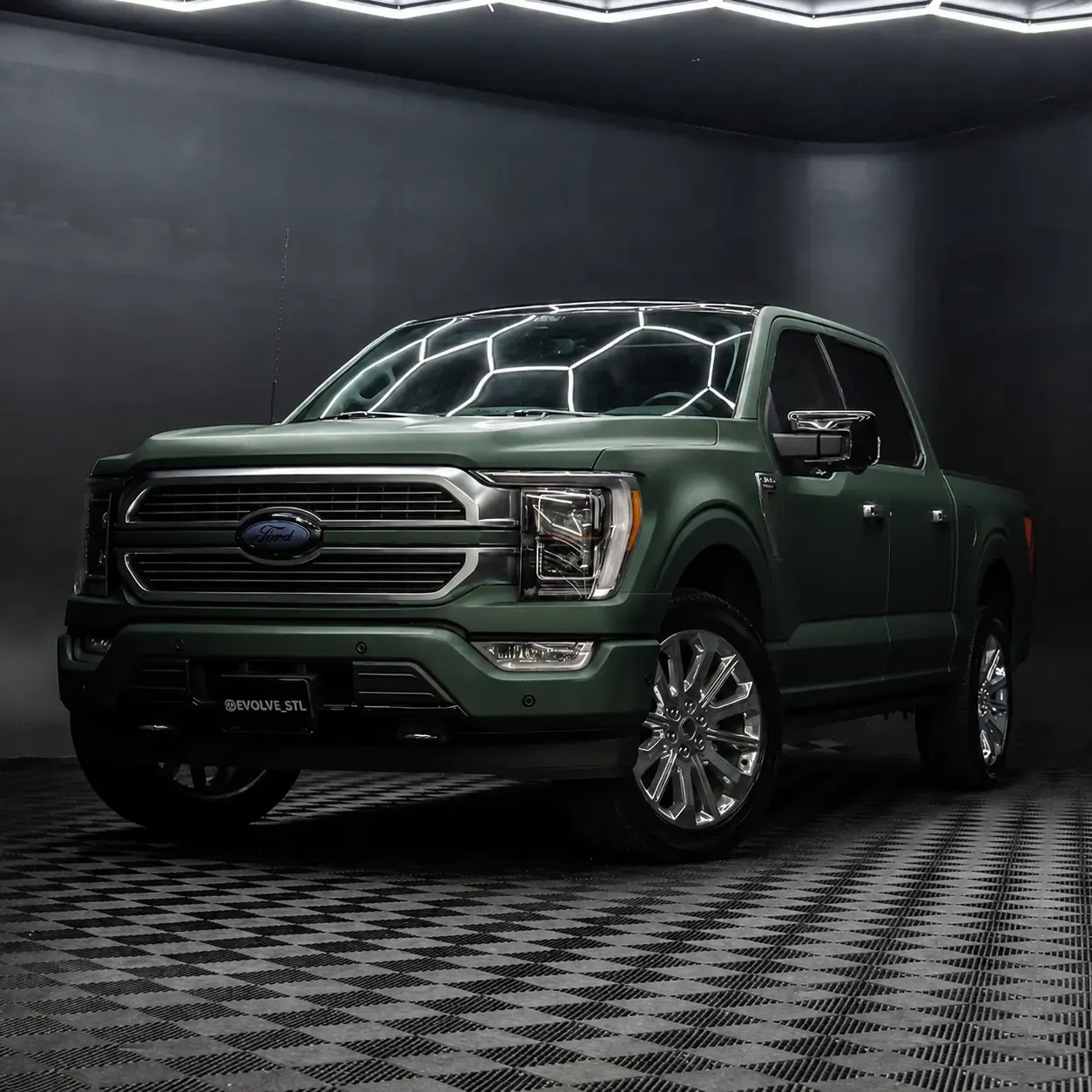
SUV or truck
Larger body, more panels and more material.
$4,200
- Every painted panel
- Factory paint preserved
- Gloss, satin or matte
- Reversible
In the shop 5-7 days
Get this quoted
Chrome delete, roof and hood wraps are priced per item.
See detailed pricingEvery car wrap
What every car wrap and color change includes
Done properly the film wraps around edges and into the door jambs, so there is no cut line when the door is open. That, and the prep underneath it, is what separates a wrap that stays down from one that lifts. Wrapping protects the paint cosmetically; paint protection film is what stops rock chips, and window tint is a separate job on the glass.
- Every painted panel
- Hood, roof, fenders, doors, quarters, bumpers, trunk and mirrors.
- Wrapped edges
- Film wrapped around edges rather than cut at them.
- Full decontamination
- Decon and a solvent wipe on every panel immediately before film goes on.
- Hardware removed
- Handles, mirror caps, badges, lights and trim off, so edges can be wrapped.
- Paint assessed first
- Checked under light before any film is ordered.
- 2 year / 24,000 mile warranty
- Workmanship warranty, confirmed in writing.
How a car wrap runs
How a car wrap runs: four stages, and the car stays the week
- Pick the color off a sample, not a photoCome look at film in daylight and under the shop lights before you commit. Photos lie about satin and matte; samples do not. We tell you which brand we are quoting — STEK Automotive, SunTek or 3M — before you commit.
- Prep, which is most of the laborWashed, decontaminated, and cleared of any old wax or sealant, because adhesive does not bond through wax. Then disassembly, then a solvent wipe panel by panel immediately before film goes on. Oil left on the surface becomes a lifted edge three weeks later.
- Lay the film, five to seven daysVinyl has a grain and a stretch limit. Deep recesses, sharp body lines and complex bumper shapes take relief cuts, heat and patience, which is why a full wrap takes days rather than hours. A roof or hood alone is one day; a chrome delete is four hours.
- Wash it by hand from then onTwo buckets, a clean mitt, pH-neutral soap, and dry with microfiber rather than letting it spot in the sun. Stay out of automatic washes with brushes — brushes catch film edges and lift them.
Wraps and paint protection
A car wrap covers your paint. It does not stop rock chips.
Vinyl takes abuse that would otherwise land on the clear coat, and paint pulled out from under a wrap years later is usually in better shape than it would have been uncovered. But it is a very thin film with no self-healing layer and no meaningful impact absorption. That impact job belongs to paint protection film.
- Handles: light wash scratches, bird droppings, bug splatter, tree sap, UV
- Does not handle: a stone off a freeway truck, which punches through to the paint
- If chip protection is the goal, that is paint protection film, not vinyl
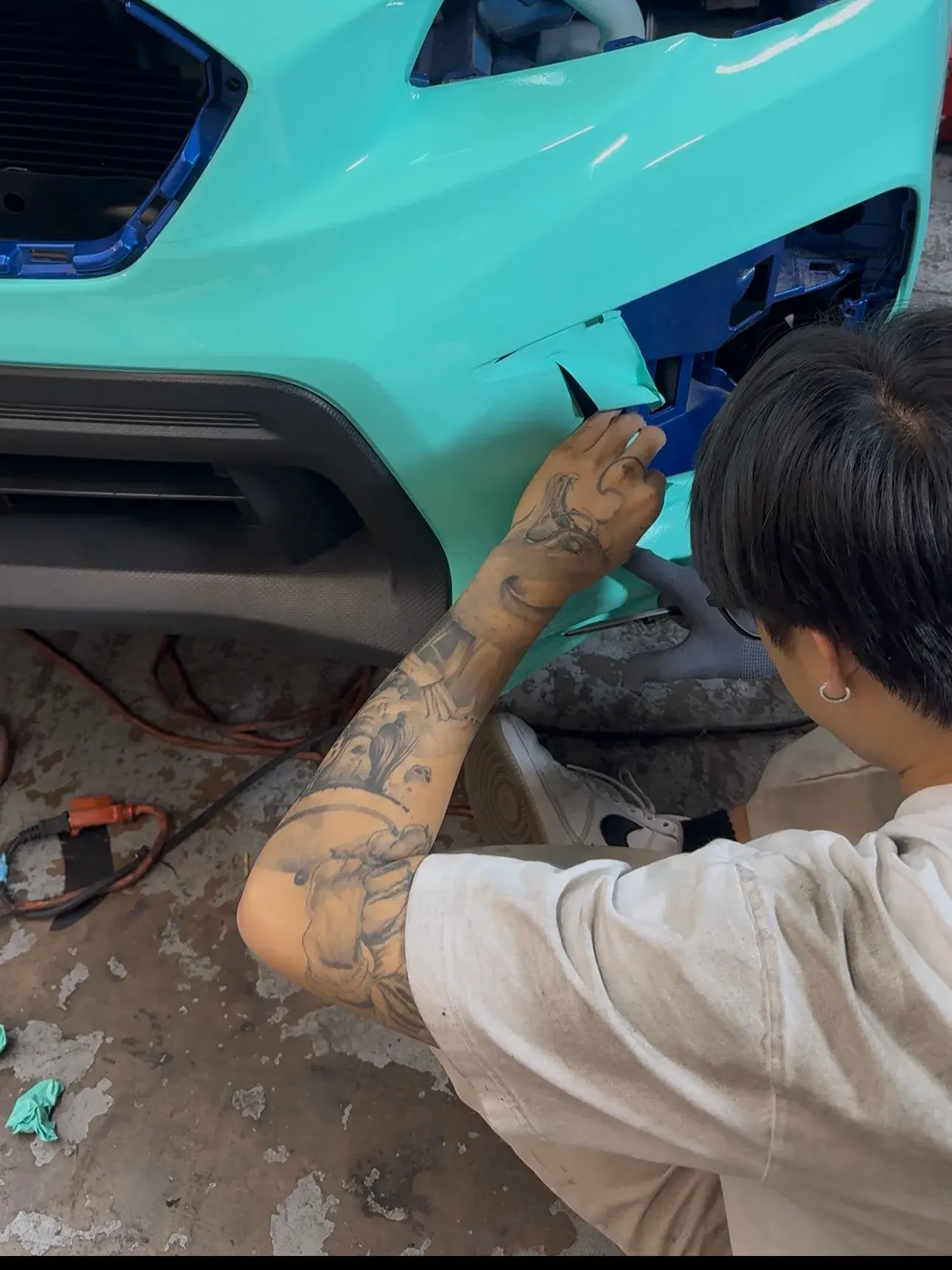
Removable by design
Removable is the whole point of a wrap on a lease
This is the practical reason most color change wraps get bought: the car goes back to the color it left the factory in. A lease return is measured against original specification, and a wrap removed before turn-in leaves factory paint behind. A respray does not.
- Read your lease agreement and confirm with your leasing company first
- We are not a party to your lease and cannot make that call for you
- Plan removal before your turn-in date, not the week of it
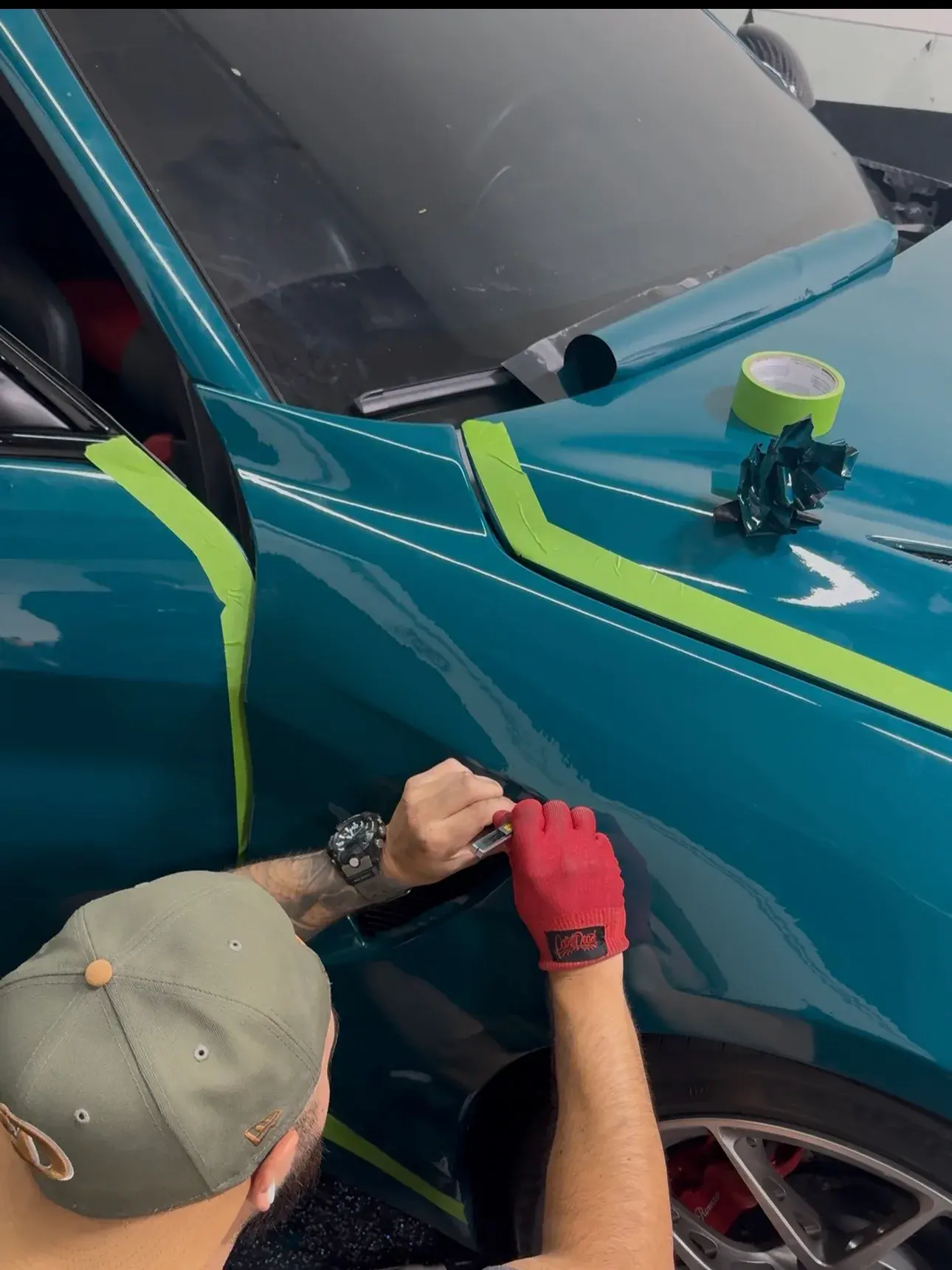
Gloss, satin and matte
Gloss, satin and matte wraps behave differently once they are on
Finish changes nothing about the price of a standard color change and almost everything about how the car looks — and about what you can do to it afterwards. Gloss paint can be polished when it swirls. Satin and matte film cannot, because polishing changes the texture that creates the finish.
- Gloss: closest to factory paint, shows fingerprints and wash marks just like paint
- Satin: low sheen, reflects softly, hides light dust better than gloss
- Matte: no reflection, reads as shape, shows skin oils around the handles
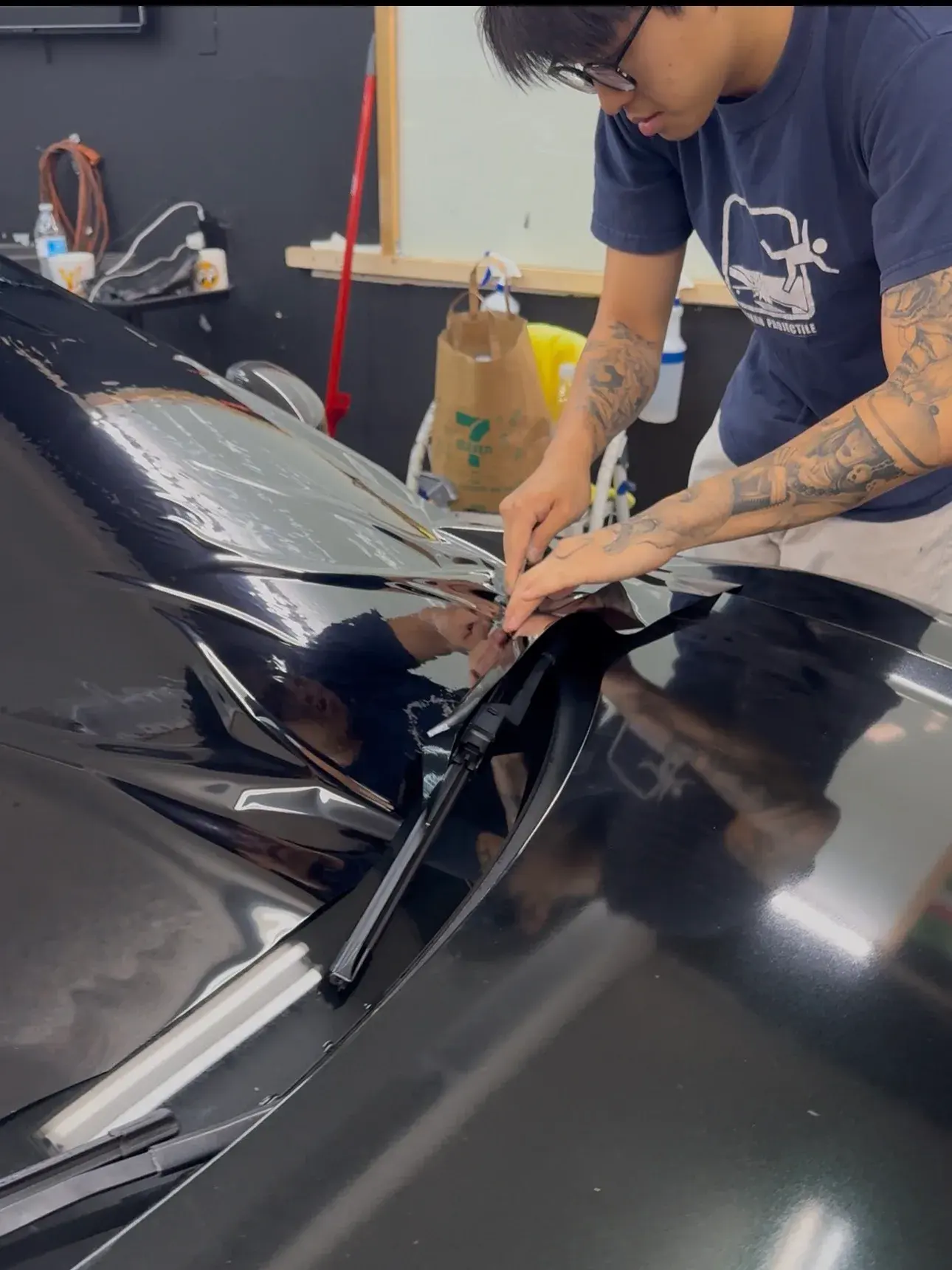
Wrap vs respray vs PPF
Car wrap, respray, or colored paint protection film
Three ways to change the color of a car, and they differ completely in what happens if you change your mind. A respray is permanent — the original finish is gone, and buyers and lease inspectors treat a repainted car as a repainted car. A vinyl color change is temporary by design.
- Vinyl: over healthy paint, off again later, finished inside a week
- Colored PPF: thicker urethane, color in the material, self-heals — quoted per car
- You can combine them: wrap the color, then clear PPF over the panels that take hits
Picked a color? Get it quoted.
Send the vehicle and the finish. Prices are published, so you get a confirmation rather than a sales call.
Full price list
Vinyl and chrome delete — published pricing
Full color change
Every painted panel wrapped. The factory paint underneath stays original and untouched.
- Coupe
- $2,800
- Sedan
- $3,500
- SUV / Truck
- $4,200
Partial
- Roof or hood only
- $425
Chrome delete
Priced per item, so you can take out only the brightwork you dislike.
- Grille
- $350
- Door handles — set of four
- $250
- Window trim
- $475
- Lower door and bumper chrome
- $400
- Roof rails
- $450
- Mirror accents Per pair
- $225
- Emblems and badges Each
- $100
Going deeper
Car wraps, in depth
The rest of what we would tell you standing next to the car. Open whichever part matters to you.
What a color change car wrap actually is
Vinyl wrap is a thin, flexible film with an adhesive backing. It is cut and heated to fit each panel, squeegeed down, and tucked into the edges. A full color change covers every painted exterior panel: hood, roof, fenders, doors, quarter panels, bumpers, trunk or hatch, and mirrors. The car underneath does not change — your paint is still your paint, with a new surface on top of it.
Vinyl is not paint. It has a grain and a stretch limit, which is why complex shapes take relief cuts, heat and patience.
We carry film from STEK Automotive, SunTek and 3M. Which brand we recommend depends on the color, the finish and the shape of the car, and we tell you what we are quoting before you commit.
The full range of car wrap finishes
- Gloss: reflective, closest to factory paint. Shows depth and clean reflections, and shows fingerprints and wash marks exactly like paint does.
- Satin: a low sheen between gloss and matte. It reflects light softly without throwing a mirror image, and it hides light dust better than gloss.
- Matte: no reflection at all. Body lines read as shape rather than as reflected light. Matte shows skin oils around the handles and cannot be polished.
- Textured: brushed metal, carbon fiber weave, forged patterns. Usually used on a roof, hood, mirrors or trim rather than a whole car.
- Color shift, chrome and metallic: films that change color with viewing angle or carry a mirror surface. Thicker, less forgiving over compound curves, slower to install, and not covered by the published prices.
Chrome delete in Huntington Beach, priced per item
We cover the bright trim with vinyl — usually gloss black, satin black or matte black — so the brightwork disappears and the car reads as one color. Priced per item because cars differ: do one, two, or all of them. Every item is removable, so chrome delete on a leased car is the same argument as a full wrap. The work takes four hours, which makes it a same-day drop off.
- Grille
- $350
- Window trim
- $475
- Roof rails
- $450
- Lower door and bumper chrome
- $400
- Door handles, set of four
- $250
- Mirror accents, per pair
- $225
- Emblems and badges
- $100Each.
Roof and hood wraps only
A roof or a hood in gloss black, satin black or matte black is $425, and it is a one day job. That price covers one panel — if you want both, tell us and we will quote it.
A black roof breaks up the side profile and makes the greenhouse sit lower. A black hood kills windshield glare on a light colored car and hides the bug damage hoods collect anyway.
Turnaround, and what is not covered by the published prices
A full color change is a multi-day job and the car stays with us for the duration. You get a start date and a pickup date when you book. Specialty films such as chrome, color shift and printed patterns are not covered by the published prices, and neither is colored paint protection film.
- Full color change
- 5–7 days
- Roof or hood wrap
- 1 day
- Chrome delete
- 4 hours
- Wash and prep
- 1.5 hoursBasic wash package is $35.
Wrap prep, and the paint underneath
Prep is most of the labor and all of the difference between a wrap that stays down and one that lifts at the edges. Wrapping the jambs covers the painted areas you see when the doors are open — it adds film and labor, and not every job calls for it.
Vinyl follows whatever is underneath it, so a dent still reads as a dent and rough repair work shows through as texture. Adhesive may not hold at all over failing clear coat. Wrap over damage and you get two problems instead of one. Failing clear coat, rust bubbles and fresh body work are reasons to wait rather than wrap.
Fresh paint is its own case. Repaired panels need to cure and off-gas before film goes over them. Ask the shop that sprayed the panel when the paint will be fully cured, and give it that time. Wrapping too early traps solvent under the film and the finish can bubble.
Washing a wrapped car, and how long a wrap lasts
Longevity depends more on where the car sleeps than on anything else. Sun and heat are what kill vinyl: the film fades, the adhesive hardens, and edges start to release. Horizontal panels go first every time. Each manufacturer publishes durability expectations for its own films, and we will show you the figures for the film you choose.
- Hand wash — two buckets, clean mitt, pH-neutral soap, rinse the mitt often
- Dry with clean microfiber or filtered air rather than letting it spot in the sun
- No automatic washes with brushes; touchless is safer, but keep jets off the edges
- Get droppings, bugs, fuel spills and sap off fast — satin and matte stain fastest
- Never wax or polish satin and matte; wax fills the texture and leaves shiny patches
- Gloss film will take a vinyl-safe sealant — ask what suits the film on your car
Taking a car wrap off
Removal is heat and patience. The film is warmed panel by panel and pulled back at a low angle so the adhesive releases with it. Whatever stays behind is cleaned off with a remover that is safe for the finish underneath.
How it goes depends on the age of the film, how much sun it has taken, and what is under it. Film pulled within its useful life comes off in large sheets. Film baked outdoors for years past that comes off in narrow strips and takes far longer. Factory paint on a car that has never been repainted almost always releases clean; aftermarket respray can lift with the film. If your car has been painted, tell us, and we will look at it before we quote.
We do not publish a flat removal price for a full wrap because the labor swings too widely. Bring the car in and we will look at it. Removal of existing lighting film is $150.
The two-year car wrap warranty
Every job carries a 2 year, 24,000 mile workmanship warranty from the shop. That covers our installation: lifting edges, bubbling that is not the result of impact or damage, and film that fails because of how it was applied.
It is separate from and on top of whatever the film manufacturer covers on the material itself. Manufacturer coverage varies by film and by brand, and we hand you the terms for the exact film going on your car. Coverage is assessed per vehicle and confirmed in writing before work begins.
Damage is not defect. A rock strike, a door ding, or a panel wrapped over paint we advised against are not warranty claims.
Booking a car wrap in Huntington Beach
We hold no certifications today. The owner, AJ and Jeremiah are enrolled at Ding King Technical Institute, working through window tint, paint protection film installation, paintless dent repair, detailing and paint chip repair, with completion expected around October 2026. What stands behind the work in the meantime is published pricing, a written workmanship warranty, and straight answers about what film can and cannot do. We do not offer ceramic coating; it is planned after training is finished.
- Shop
- 15317 Pipeline LnHuntington Beach, CA 92649. Not mobile — wrap work needs clean air and steady temperature.
- Serving
- Orange CountyHuntington Beach, Newport Beach, Costa Mesa, Fountain Valley, Westminster, Seal Beach.
Car wrap questions
How much does a full car wrap cost in Huntington Beach?
A full color change is $2,800 for a coupe, $3,500 for a sedan and $4,200 for an SUV or truck. A roof or hood on its own is $425. Specialty films such as chrome and color shift are quoted on the car.
How long does a color change car wrap take?
A full color change is 5 to 7 days in the shop. A roof or hood is 1 day, and a chrome delete is 4 hours. The car stays with us for the duration of a full wrap, so arrange other transportation.
How long does a vinyl wrap last?
That depends mostly on sun exposure and where the car is parked. A garaged car holds its wrap far longer than one sitting outside all day, and the roof, hood and trunk fade or lift first. Each film manufacturer publishes its own durability expectations, and we show you the figures for the film you pick.
Will a wrap damage my paint?
Not if the paint underneath is sound. Factory paint in good condition almost always releases cleanly when the film comes off. The risks are aftermarket respray, failing clear coat and panels that are already chipping, because adhesive can lift those. We inspect the paint before we quote.
Does a wrap protect against rock chips?
No. Vinyl handles light scratches, bird droppings, bug splatter, sap and UV, but it is too thin to absorb a stone strike and it does not self heal. If chip protection is what you want, that is paint protection film.
Can I wrap a leased car?
Usually, because the wrap is removable and the factory paint underneath is untouched. Read your lease agreement first, then confirm with your leasing company, since we are not a party to that contract. Plan the removal before your turn in date so the car goes back in its original color.
What does chrome delete cost?
It is priced per item. Grille is $350, window trim is $475, a set of four door handles is $250, mirror accents are $225 a pair, lower door and bumper chrome is $400, roof rails are $450, and emblems and badges are $100 each. The work takes 4 hours.
Can I run a wrapped car through a car wash?
Hand washing is the safe answer, with two buckets, a clean mitt and a pH neutral soap. Avoid any automatic wash with spinning brushes, because brushes catch film edges and lift them. Touchless washes are safer, but keep high pressure jets angled and back from edges and seams.
Can you wrap over a dent, a scratch or peeling clear coat?
Not well, and we will tell you so. Vinyl follows the surface underneath, so a dent still reads as a dent and rough spots show through as texture. On failing clear coat the adhesive can pull the coat off when the film is removed. Fix the panel first, then wrap it.
Which car wrap vinyl brands do you use?
We carry film from STEK Automotive, SunTek and 3M. Which one we recommend depends on the color, the finish and the shape of your car. You get the manufacturer's own coverage terms on top of our 2 year, 24,000 mile workmanship warranty.
Thinking about a color change in Huntington Beach?
Come look at film in daylight before you commit. We will quote the vehicle, name the brand, and tell you what the prep underneath actually involves.