

STEK, SunTek & 3M
The Films We Install: STEK, SunTek and 3M
We carry STEK Automotive, SunTek and 3M. Here is what each is known for, and how we pick one for a specific car.
- Brands carried
- STEK, SunTek, 3M
- Warranty
- 2 yr / 24k mi
- Fitted at
- Pipeline Ln
Three film brands, one shop
Why we carry three film brands instead of one
Plenty of shops carry one manufacturer and install it on everything that comes through the door. That is easier to buy and easier to sell. It is not always right for the car in the bay — a film that stretches cleanly around a wide, curved bumper is not automatically the film you want baking on a flat hood in full sun.
Carrying three means we match the film to the car and the budget instead of matching the car to whatever we happened to buy. It also means we will not tell you one brand is the only correct choice. That claim gets made constantly in this trade, and it is usually a claim about which distributor a shop buys from.
Choosing a film
How we choose a film, standing in front of the car
The choice gets made in front of the car, not over the phone. We look at the paint, the panels and how the car gets used, then tell you what we would put on it.
- Paint and finish — gloss, matte or satin, and whether the color shows every swirl
- Panel shape — deep bumper curves and wide flat hoods ask different things of a film
- How the car is used — freeway miles, canyon runs, track weekends, or mostly still
- Where it lives — a closed garage is not a driveway two blocks off the sand
- Budget — sometimes a front package now beats a stretched full body later
- How long you are keeping it — sell next year and keep for ten get different answers
Brand
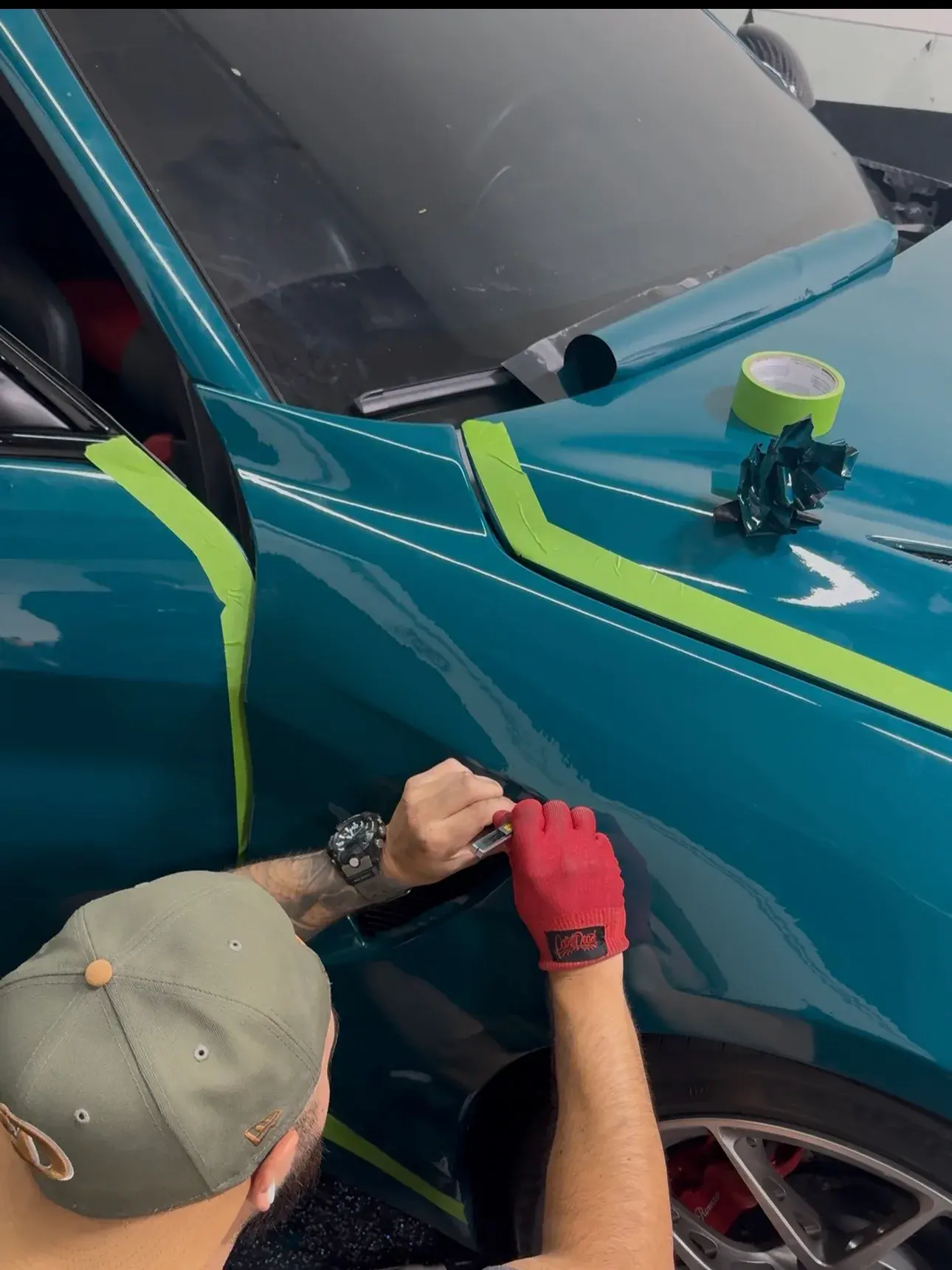
STEK Automotive: paint protection and window film
A newer name than the legacy brands, and it built its reputation on paint protection film. The range covers clear films, matte and satin finishes, and colored protection films that change how a car looks while still doing the work of protection — which makes a finish change possible without going to vinyl.
- Makes window film as well as paint protection film
- Our most common pick when an owner wants a specific finish
- Chosen when someone will not trade away impact protection to get that finish
Brand
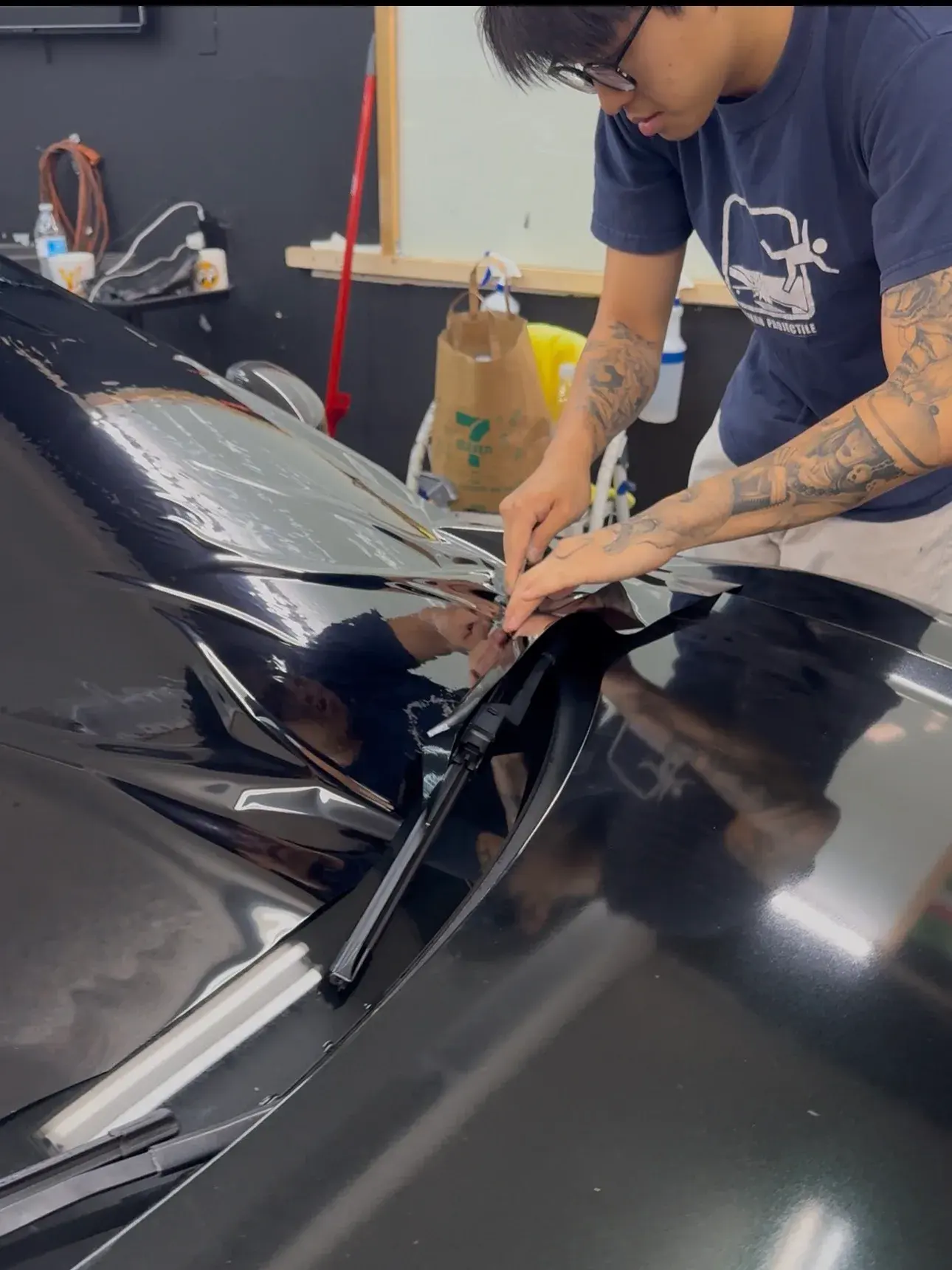
SunTek: paint protection and window film
In both sides of this trade for a long time. The window film range runs from straightforward dyed films up through ceramic constructions, which gives us room at several price points.
- A common pick for clear protection on daily driven cars
- Widely available — film that is easy to source is film we can get this week
- Useful when the budget needs options rather than one number
Brand
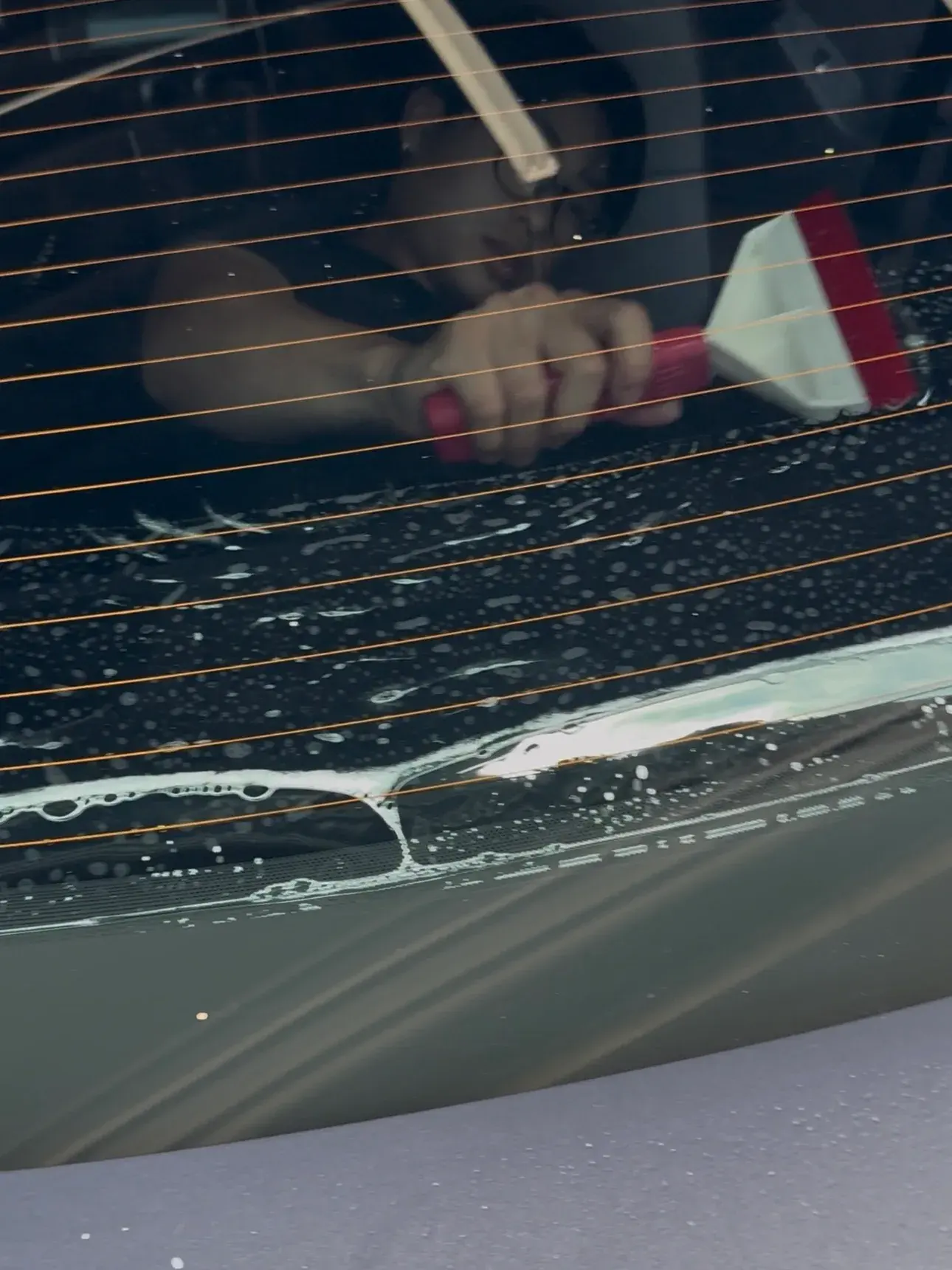
3M: paint protection and window film
A materials manufacturer first. It makes its own adhesives and its own films and has been in window film for decades. The catalog is broad: dyed films, reflective and metalized films, and multilayer constructions that reject heat without metal, so they do not interfere with phone, GPS or keyless entry signals.
- Makes paint protection film as well as window film
- The usual quote when someone wants a name they already recognize
- Backed by a long running warranty program
Judging an install
Every film looks correct the day it goes on
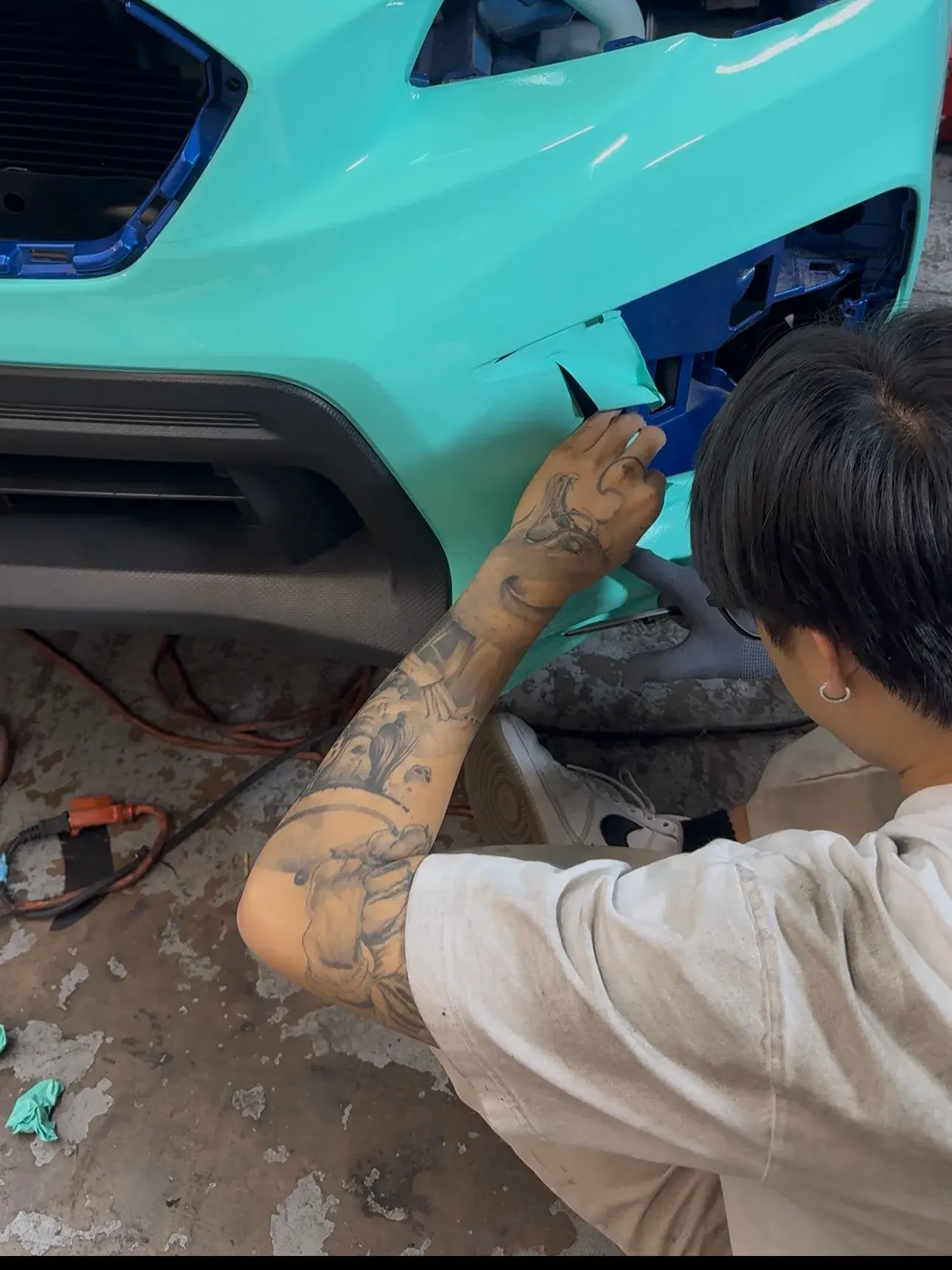
The differences show up later, and the biggest one is not the film at all. A mid-range film with clean edges and proper relief cuts will outlast a top tier film rushed through in an afternoon. When one quote lands far under the rest, the money came out of labor hours, not the film.
- Yellowing: a weak topcoat goes yellow unevenly — worst on the hood and roof
- Edges: cheap film relaxes over months and lifts at bumper corners and mirror caps
- Removal: quality adhesive comes off in sheets; a cheap one tears and leaves glue
Know which film you want? Get it quoted.
Send the vehicle and the brand. Prices are published, so you get a confirmation rather than a sales call.
Going deeper
Film construction and specs, in depth
The rest of what we would tell you standing next to the car. Open whichever part matters to you.
How to read a window film heat rejection claim
Window film marketing runs on three numbers. Two get quoted because they sound impressive. The third answers the question. Roughly half the energy arriving from the sun is infrared, most of the rest is visible light, and a small slice is ultraviolet — so a film can block nearly all the infrared it was tested on and still pass heat through as visible light.
- VLT — visible light transmittance
- How darkNothing else. A 5 percent dyed film is very dark and can still let a lot of heat into the cabin.
- IR rejection
- A narrow sliceUsually measured around 900–1000 nanometers, where films perform best. That is why 95 and 98 percent claims are so common.
- TSER — total solar energy rejected
- The real answerThe share of the sun's total energy — UV plus visible plus infrared — kept out of the car. Quoted least often.
How paint protection film is built
Paint protection film is not one material. It is a stack, and each layer has a job. Most automotive paint protection film runs around eight thousandths of an inch thick, with the polyurethane accounting for most of that.
- Topcoat. A thin clear layer handling gloss, stain resistance and self healing. Self healing means the topcoat has elastic memory, so light swirls close up with heat from the sun or a heat gun. This layer decides how the film looks in year four.
- Base film. A polyurethane layer that does the protecting. It spreads the energy of a rock strike so the paint underneath does not chip, and it has to stretch around a bumper corner and stay there.
- Adhesive. A pressure sensitive layer that has to hold an edge for years and then release cleanly when the film comes off. This is where cheap film usually fails first.
How window film is built
The same idea in a thinner package: a scratch resistant hard coat, polyester layers carrying whatever does the heat work, an adhesive layer, and a liner peeled off at install. What sits in the middle is what you are paying for.
- Dyed film. Dye in the polyester absorbs light. Dark, cheap, and it rejects less heat than people expect. Most likely of the four to fade or turn purple.
- Metalized film. Fine metal layers reflect heat well. Metal can also interfere with radio, GPS, tire pressure sensors and keyless entry.
- Carbon film. Carbon particles instead of dye. More stable color over time and better heat performance than dyed film.
- Ceramic film. Non conductive ceramic particles reject infrared energy with no metal in the stack. This is the type that rejects real heat at a light, legal shade, and it costs the most.
Two film warranties, and why you want both
There are two separate promises on a film job, and they cover different failures. The manufacturer warranty covers the film: yellowing, cracking, bubbling, delamination, adhesive failure, color change. Length and terms differ by brand and by the specific film, so we confirm what your film carries in writing before we start rather than quoting a number off a poster.
Our workmanship warranty covers the work. You want both, because neither covers the other's failures. A manufacturer will not replace film because an edge was never tucked properly. A shop cannot un-yellow film that failed chemically. If a shop offers one and goes quiet about the other, ask why.
Shade narrows the film choice before brand does
California sets two thresholds on front side window film and none at all on the rear glass, which decides your shade before any brand conversation starts. The full reading of the statute lives on its own page.
- Front side windows
- 88% film + FMVSS 205Both conditions under CVC 26708(d). Near-clear in practice.
- Rear side and rear glass
- No limitProvided the car has both side mirrors.
- Windshield
- 29 in above the seatA measurement under 26708(c). There is no four-inch strip in the code.
What to ask any film shop before you book
Any shop that handles film daily can answer these in a couple of minutes, and the answers tell you more than a photo gallery does.
- Which brand and which film are you putting on my car, and can I see the spec sheet?
- Is the TSER figure you quoted measured at the shade I am actually getting?
- What does the manufacturer warranty cover, for how long, and who handles a claim?
- What does your workmanship warranty cover, and can I have it in writing?
- Are edges wrapped or trimmed on the panel, and how do you handle relief cuts?
- How many days will my car be here, and what changes that?
- For the front side windows, what is the film's visible light transmittance, and what is the total price?
Where our training stands, and where to find us in Huntington Beach
Trinity Aesthetics holds no certifications today, and we are not going to print a badge saying otherwise. Three of us — the owner, AJ and Jeremiah — are enrolled at Ding King Technical Institute. The coursework covers window tint, paint protection film installation, paintless dent repair, detailing and paint chip repair, and it completes around October 2026.
In place of credentials: prices published where you can read them before you call, a written estimate naming the film going on your car, and a two year or 24,000 mile workmanship warranty. One service we do not sell yet is ceramic coating — it is planned after training finishes, and we will not quote it before then.
Bring the car by and we will put sample pieces on the glass and against the paint, so you judge the shade in daylight instead of on a screen.
- Shop
- 15317 Pipeline LnHuntington Beach, CA 92649. One location, not mobile, taking cars from across Orange County.
- Front PPF package
- $1,850Varies by vehicle.
- Windshield protection film
- $450
- Windshield tint
- $250
Questions about film brands
Which brand makes the best paint protection film?
There is no single answer, and a shop that gives you one is describing its shelf, not your car. STEK, SunTek and 3M all make film that performs when it is installed properly. The right choice depends on the finish you want, the panel shapes, how the car gets used and what you want to spend.
Does darker tint mean a cooler car?
No. Darkness is measured by VLT, visible light transmittance, which only describes how much light gets through the glass. Heat performance is measured by TSER, total solar energy rejected, and a light ceramic film can reject more total energy than a very dark dyed film. Compare TSER at the same shade rather than comparing IR numbers.
What does paint protection film cost at Trinity Aesthetics?
A front package is $1,850, a track package is $2,500 and full body is $5,500, and all three vary by vehicle. Individual pieces are priced on their own: hood $750, bumper $850, front lip or side skirts $750, and windshield protection film $450. Your figure is confirmed in writing before work starts.
How long does window tint take, and what does it cost?
A full vehicle takes about 4 hours and a windshield on its own takes about 2 hours. Pricing is $450 for a coupe, $650 for a sedan, $850 for an SUV or truck, and $250 for a windshield. It is one of the few services here you can drop off and collect the same day.
What does the Trinity film warranty actually cover?
Trinity Aesthetics covers its own installation work for two years or 24,000 miles, on top of whatever the film manufacturer covers on the film itself. Lifting edges and other installation issues sit with us; yellowing, cracking or bubbling sit with the manufacturer. Terms are assessed per vehicle and confirmed in writing before work begins.
Are you a certified or authorized film installer?
No. We hold no certifications today. The owner, AJ and Jeremiah are enrolled at Ding King Technical Institute in window tint, paint protection film installation, paintless dent repair, detailing and paint chip repair, and that training completes around October 2026. Until then we compete on published pricing, a written estimate naming the film, and the workmanship warranty.
How dark can my front side windows legally be in California?
Vehicle Code 26708(d) applies two thresholds to the front side windows: the material must have "a minimum visible light transmittance of 88 percent" and it must also meet FMVSS 205, including "the specified minimum light transmittance of 70 percent". Rear side windows and the rear window have no darkness limit as long as the car has both side mirrors. A medical exemption sits in 26708(b)(10), not 26708.5, and requires "a letter or other document signed by a licensed physician and surgeon certifying that the person must be shaded from the sun due to a medical condition"; it does not apply during darkness. This is general information, not legal advice.
Do you offer ceramic coating?
Not yet. It is planned after our training finishes around October 2026, and we will not sell it before then. What we do offer today is paint protection film, window tint, vinyl color change, chrome delete, lighting film, windshield protection film and a $35 basic wash package.
Not sure which film your car needs?
Tell us the vehicle, where it parks and how you drive it. We will name the film we would put on it and say why.